Newsletter Subscribe
Enter your email address below and subscribe to our newsletter
Enter your email address below and subscribe to our newsletter

 ByJohn A
Costume design speaks before a line is spoken, shaping mood with quiet authority. It translates script into tactile intent, guiding pace, gaze, and gesture. Through texture, silhouette, and color, wardrobes encode era, status, and inner life, forming a visual grammar that audiences instinctively understand. The process hinges on disciplined collaboration, turning text into measurable choices. Iconic looks linger, echoing culture while supporting performance; the stage and screen offer clues that reward a closer look, if one pauses to notice.
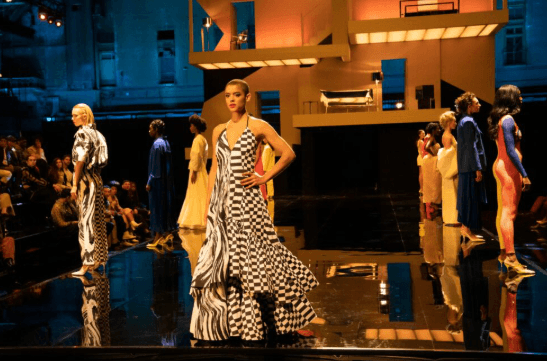
Costume design functions as a visual language that immediately encodes character, era, and social stance, guiding the audience’s perception before a single line is spoken. The approach distills narrative meaning into texture, silhouette, and color, transforming scenes into expressive architecture.
Costume symbolism clarifies intent, while wardrobe logistics ensure seamless preparation, allowing actors to inhabit truths without distraction or constraint.
From script to wardrobe, the design process unfolds as a disciplined dialogue among writers, designers, and directors, translating text into tactile possibility. In this space, concepts collide and converge, revealing a choreography of collaboration dynamics that respects constraints while inviting invention. The result is a poised, tactile vocabulary—costuming as interpretation, not imitation—guided by clarity, restraint, and a shared pursuit of expressive freedom.
Era communicates as much as dialogue or lighting, with clothes serving as a quick index of time, social mores, and shifting mood. garments anchor characters in a specific era, but they also reveal inner state: fabric weight, cut lines, color palettes, and detailing signal the pressures and aspirations that define a moment. era identity and mood identity shape character perception with precision and freedom.
Iconic looks in theatre and film function as cultural touchstones, crystallizing moments in fashion history while echoing broader social dialogues.
The discourse maps iconic silhouettes onto era signaling, revealing how costumes distill character mood and intention.
Designers lean into minimalism or excess as cultural echoes, guiding audiences toward freedom of interpretation while preserving precise, stylish commentary on performance, identity, and spectacle.
See also: The Future of Software Engineering
Designers balance comfort vs. performance by prioritizing mobility first fabrics and rigorous comfort testing, enabling studio-tested silhouettes that move with actors while preserving visual impact, ensuring freedom of expression without sacrificing practicality or durability under demanding production conditions.
Budget constraints shape historical costume accuracy, subtly guiding choices toward archival accuracy while permitting creative interpretation. The result is a discerning balance, where practicality nudges fidelity, and freedom thrives within prudent, respectful use of period references and resources.
Color psychology in horror and color psychology in sci fi reveals how hues shape mood, cueing fear or wonder; the approach remains discerning and stylish, granting audiences freedom to interpret visuals beyond narrative constraint.
A runway of choices unfolds like a carefully tuned instrument, revealing how sustainable materials are integrated: sustainable fabrics and ethical sourcing guide wardrobe decisions, aligning aesthetics with responsibility while remaining audacious, thoughtful, and freely expressive within creative constraints.
Audiences, through audience driven aesthetics, steer evolving on-screen fashion trends as collective taste shifts respond to dialogue, representation, and timing; social media influence amplifies micro-cycles, making stylistic choices resemble participatory commentary rather than fixed norms.
Costume design, quietly influential, threads coherence through performance. By whispering era and intention, garments steer perception without overtness, offering a discreet compass for audience and actor alike. The wardrobe becomes a courteous translator, softening chaos into readable nuance and guiding pacing with restrained flair. In this careful choreography, fashion does not shout history; it nudges the eye toward truth, enriching narrative texture while preserving the drama’s integrity. Subtle, strategic, and always essential, clothing sustains the story’s poised, unspoken dialogue.